Public Education
for the Next Generation
Minister's Vision Statement
"Our vision is to bridge the rural-urban education divide by transforming government schools into institutions of choice—delivering academic excellence, digital readiness from the very beginning, and a strong student welfare ecosystem."
Shri Madhu Bangarappa
Structural Accountability
The 8 Guarantees for Public Schools
An official policy framework explicitly engineered to overhaul infrastructure, stabilize student metrics, and confidently match private tier standards.
One Teacher Per Class
One teacher for every class, eliminating combined teaching and ensuring subject experts from Class 6 onwards.
Universal English Medium
Bilingual English-medium sections expanded statewide, supported by targeted language training modules for all teachers.
Digital & AI Literacy
Structured digital learning begins from Class 1, with foundational Artificial Intelligence exposure from Class 3.
Holistic Faculty
Time-bound recruitment ensures Physical Education, music, and creative arts teachers are available in schools.
Teacher De-burdening
Administrative support staff reduce non-teaching workload, protecting valuable classroom instruction time for teachers.
Continuous Assessment
Regular lesson tracking replaces stressful examinations, supported through structured and recurring parent-teacher meetings.
Competitive Tracks
Vocational skills and competitive exam preparation pathways introduced systematically from Class 6 onwards.
Welfare Expansion
Enhanced nutrition support including milk, eggs, and bananas extended from pre-primary through Class 12.
Voices of Transformation
See how strategic policy structural shifts translate directly into verifiable updates inside institutional walls across Karnataka.
Structural Scaling
Systemic & Institutional Reforms

Expansion of Karnataka Public Schools (KPS)
The department significantly expanded Karnataka Public Schools as a flagship initiative. The ministry increased targets to establish 800 to 1,000 KPS units statewide, creating modern government educational campuses. These institutions were designed to deliver bilingual, high-quality education from primary classes onward while strengthening public education access across Karnataka.
English Medium Instruction & Digital Promotion
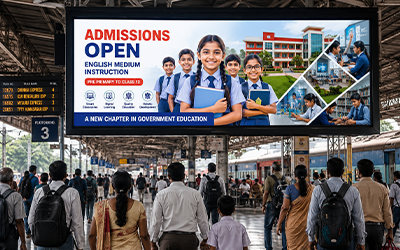
The ministry accelerated expansion of English Medium sections across government schools. To meet rising demand and improve competitiveness, the department launched an unprecedented outreach campaign. Hoardings were installed at taluk centers, railway stations, and bus stands, promoting government school facilities and increasing public enrollment across communities statewide effectively.

Aided School Management & Staff Rationalization
Policy reforms prevented teacher transfers to non-teaching positions, protecting valuable instructional time. Additionally, the department mandated teacher reallocation from under-enrolled aided schools to high-demand institutions, improving deployment efficiency while addressing critical vacancies and strengthening educational service delivery throughout the state effectively overall.
Learning Outcome Transformation & Examination Performance Framework
Through sustained classroom interventions, strengthened academic monitoring systems, and targeted student support programs, Karnataka's school education ecosystem achieved unprecedented performance benchmarks across secondary and pre-university education.
Leadership Accountability Framework
Strong leadership, regular reviews, and clear accountability across all administrative levels ensured focused implementation of academic interventions, timely problem-solving, continuous monitoring, and collective responsibility for improved student outcomes.
Early Teacher Deployment & Capacity Building
Early appointment of teachers and extensive training programs improved classroom effectiveness, strengthened teaching quality, enhanced assessment practices, and equipped educators to address diverse student learning needs.
Early Syllabus Completion & Revision Systems
Timely syllabus completion enabled focused revision, remedial teaching, doubt clarification, and examination preparation, reducing academic pressure while ensuring students were better prepared for final assessments.
Data-Driven Assessments & Gap Interventions
Continuous assessments and performance analysis identified learning gaps early, enabling focused academic support, personalized interventions, and timely corrective measures for improved student achievement.
Universal Resources via SSLC Student Corner
Free access to question banks, blueprints, model papers, and learning resources ensured equitable preparation opportunities and reduced dependence on external tuition support.
Statewide Preparatory Examinations
Three preparatory examinations familiarized students with board patterns, strengthened revision efforts, reduced examination stress, and improved confidence through continuous practice and feedback.
Community Participation & Parent Engagement
Parents, communities, and school committees actively supported students through guidance, motivation, academic monitoring, and local initiatives that strengthened learning environments beyond classrooms.
Equity Architecture
Student Welfare & Specialized Projects
Nutritional Expansion
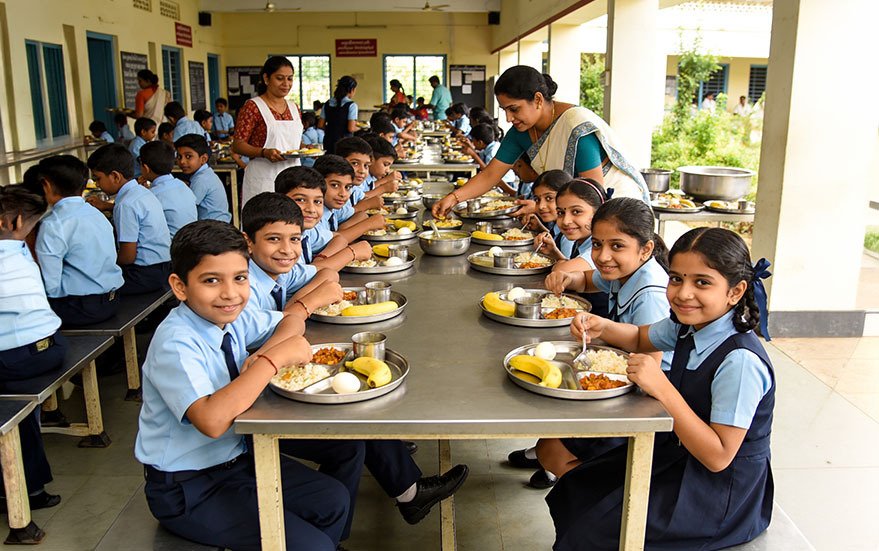
Under revised welfare guidelines, the midday meal programme was expanded to cover students from LKG and UKG through Class 12. This strengthened nutritional support across government schools while ensuring continuous access to supplements such as eggs and bananas, helping improve student health, attendance, and learning outcomes statewide.
Specialized Institutional Care
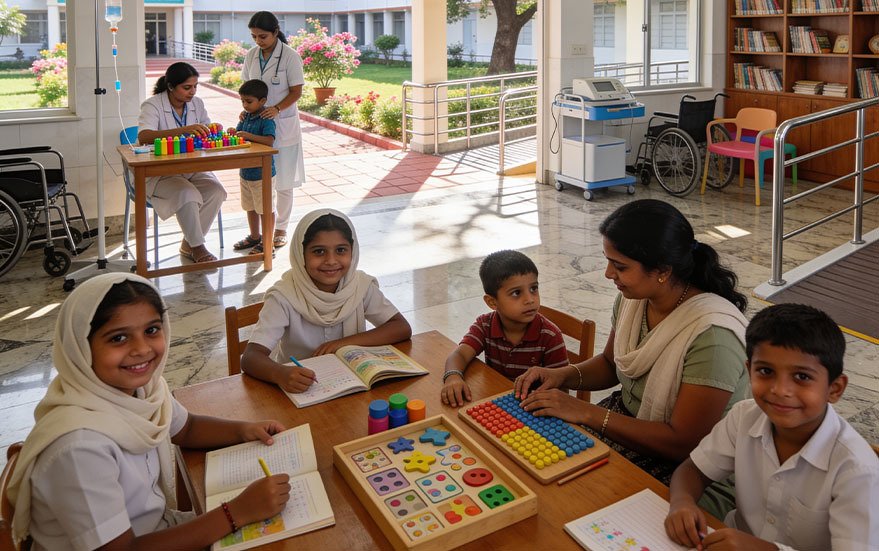
The department planned dedicated learning centers within Kidwai Memorial Institute of Oncology, Bengaluru, for children undergoing treatment. Complementing this effort, structured developmental support systems were proposed for special schools in regions such as Tirthahalli, ensuring inclusive educational opportunities and improved care for children with diverse needs.

Age-Rule Modernization
Enrollment guidelines for Class 1 were streamlined by introducing a sixty-day flexibility window. The reform reduced recurring admission challenges while aligning age-based tracking systems across LKG and UKG levels, creating a more consistent, transparent, and student-friendly admission framework throughout the education system.