In the last few years, the use of digital technology in the field of education has increased unprecedentedly. Online classes, mobile apps, digital libraries, artificial intelligence-based learning systems, e-books, and video lessons are part of education today. This change is both inevitable and welcome. But amidst this change, we must ask ourselves a very important question. Does the digital education system we are designing include all children? Or are we unknowingly excluding some children from it?
Whether it is the government, schools, or society, we frequently use messages like “watch on mobile,” “download the app,” and “learn online” on social media or in official announcements. But does every child have a smartphone in their hand? Does every family have a stable internet connection? Do three children in the same house have separate digital devices? The answer to these questions is not always “yes.”
In rural Karnataka, many families still share and use a single mobile phone among all members of the house. In some places, the internet connection is weak. Some students can use the mobile only in the evening after their parents return home from work. Still, some other children do not have access to a digital device at all. In such a situation, if digital platforms are made the only primary pathway for education, instead of reducing the gap of opportunities, there is a risk of it increasing further.
Equality in education does not mean providing the same kind of service to everyone. It means designing the service in such a way that everyone gets an equal opportunity. A student studying in the city might have fast internet and a laptop available right at home. But for a student in a distant village, the school’s computer laboratory might be their very first digital experience. Therefore, it is essential to understand these differences while formulating education policy.
There is absolutely no question of opposing digital education. The question is about its implementation. An app might be excellent. But for a child who cannot use it, it is of no benefit. There might be thousands of books in a digital library. But for a student without the internet, it becomes like a closed door. Therefore, while introducing technology, we must ask not just “who can use it?” but also the question, “who is unable to use it?”
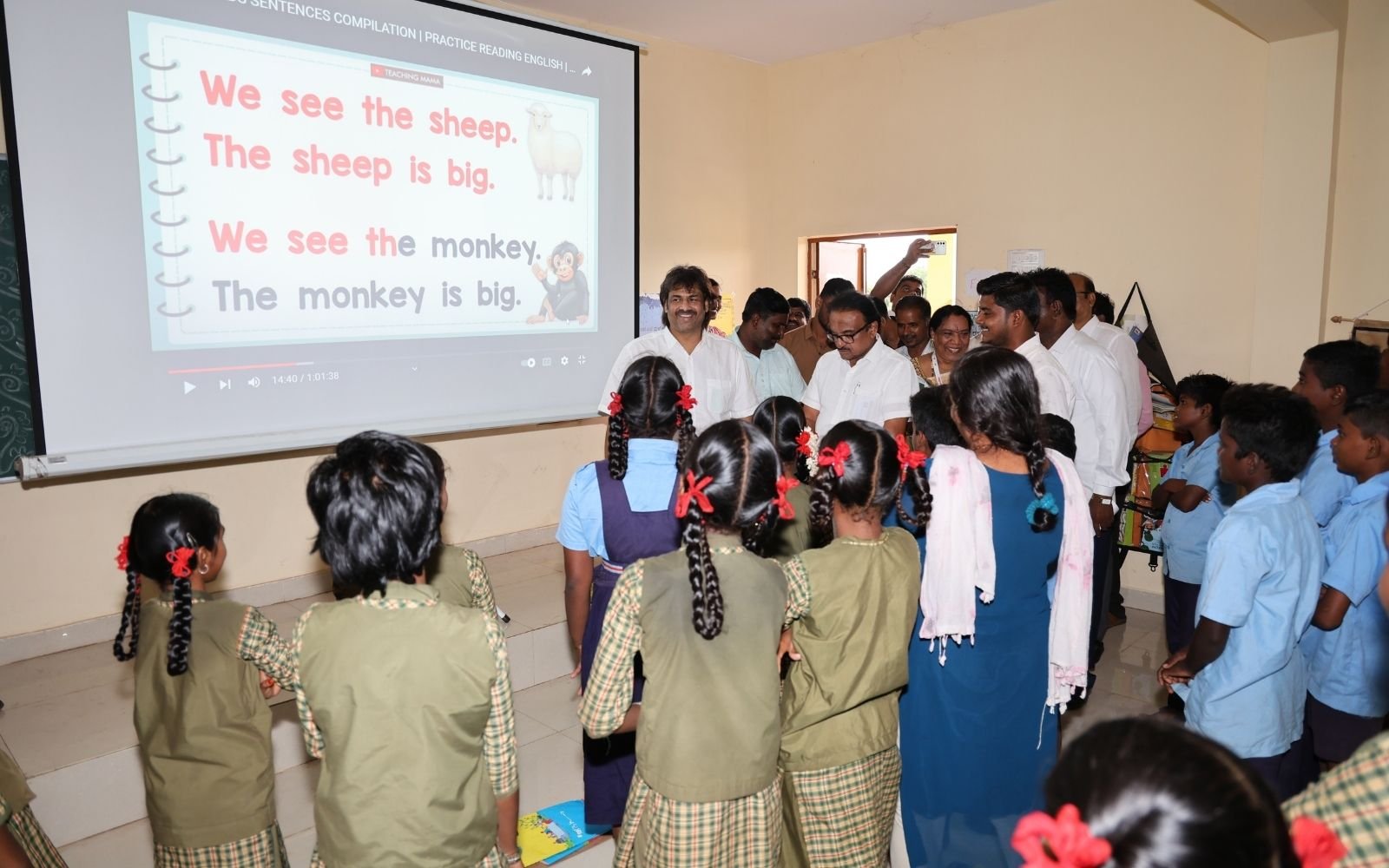
According to my belief, digital education should not replace the school; it must strengthen the school. Quality digital classrooms, computers, good internet connectivity, and digital libraries must become available in every government school. Even if a student does not own a device at home, they must get that opportunity within the school itself. In education, no child’s future should depend on their family’s financial condition.
Along with this, the role of teachers is also extremely important. They must receive training to use technology effectively. Teachers themselves can best decide how to connect digital content to classroom learning, when to use technology, and when direct teaching is more effective. Technology must complement the experience of teachers; it should not become an alternative.
To reduce the digital divide, investment in infrastructure is also necessary. Every school must have a reliable internet connection, functional computers, digital learning tools, and a maintenance system. Along with this, digital content must be designed in a way that is convenient for children with special needs to use as well. Inclusivity in education means a system that leaves no one behind.
It is a matter of joy that we are talking about artificial intelligence, digital libraries, and online learning today. But at the same time, we must not forget the reality that a village student is still waiting for their first smartphone. They too must be at the centre of our education system. Technology must expand opportunities; it should not create new inequalities.
In my view, a successful digital education system is not a system that possesses the most sophisticated apps. It is a system where every student, regardless of the background they come from, gets an equal opportunity to learn. If digital devices are confined to the hands of only a few, it is not a sign of progress. It becomes a true educational revolution only when they equally enrich the learning of every school, every classroom, and every child.
What we need to build is not just a digital Karnataka, but a Karnataka of equal opportunities. Technology should be used not just to take a few people forward, but to move along by bringing everyone together. The true success of education lies right here.